A practical guide for business and technology leaders
Introduction: When AI Acts Autonomously, Can You Trust It?
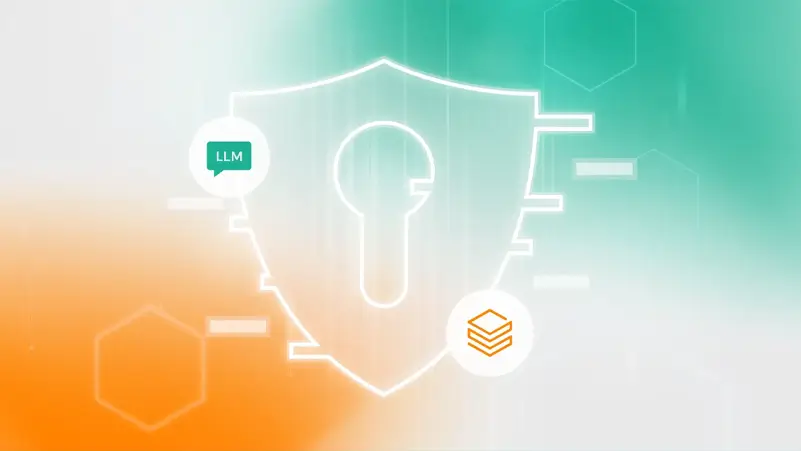
AI agents capable of independent decision-making introduce powerful automation. But also raise critical concerns about security, ethics, and governance. Can your organization ensure autonomous decisions remain compliant, ethical, and controlled? At Lovelytics, we focus on embedding robust governance into Agentic AI, ensuring innovation is never compromised by risk.
Why It Matters: The Risks of Agentic Autonomy
Agentic AI magnifies efficiency, but unmanaged autonomy exposes your organization to significant risks:
- Exposure of sensitive data from ungoverned sources
- Biased or unclear decision-making causing reputational and legal risks
- “Agent drift”, deviations from intended behaviors or policies
A Trustmarque report found only 7% of organizations have proper AI governance frameworks, highlighting a troubling gap that threatens compliance and operational resilience.
Governance at the Data Level: Ensuring Quality and Control
Governance at the data level is critical for reliable AI outcomes. Key practices include:
- Data quality management: Implementing validation checks, anomaly detection, and cleansing processes to ensure input accuracy and reliability.
- Data lineage tracking: Maintaining clear documentation of data sources, transformations, and utilization to enhance transparency.
- Access controls: Strictly defining who can access data, with fine-grained permissions governed through centralized management.
- Data retention policies: Establishing clear policies for data lifecycle management, including secure archival and deletion aligned with regulatory requirements.
Effective data governance strengthens trust, improves decision-making accuracy, and ensures compliance with data protection standards.
Securing Agentic AI from Day One
Maintaining data privacy and regulatory compliance means embedding security from inception:
- Identify and secure sensitive data entry points; anonymize and encrypt data workflows
- Implement least-privilege access controls, orchestrated centrally through unified governance layers
- Regularly audit compliance, leveraging detailed logs to validate adherence to GDPR, HIPAA, CCPA, and emerging AI regulations
This proactive stance ensures agents respect privacy and uphold compliance throughout their lifecycle.
Acting Ethically: Fairness, Transparency, and Control
Unchecked autonomy increases ethical vulnerabilities. Address these proactively through:
- Bias evaluations and fairness testing at both model and output stages
- Adversarial testing and red-teaming, surfacing vulnerabilities with rigorous stress-testing of prompts
- Transparent, explainable outputs using decision rationales, interpretability frameworks, or human-readable decision trees
- Hallucination mitigation, grounding agent responses with verified knowledge sources and trusted indexing mechanisms, and periodic and often automated evaluation
Such practices ensure agent actions remain fair, explainable, and aligned with organizational values.
Governance: Clearly Defined Permissions and Roles
Effective AI governance includes establishing clear guidelines, boundaries, and roles:
- Define explicit permissions and operational boundaries for agents
- Continuously monitor agent behavior using automated tracking, logging, and lineage metadata
- Automate escalation processes and human intervention triggers for unexpected agent behaviors
- Maintain audit-ready structures, traceable decision-making with clear lineage across data, models, and decisions
- Enable cross-functional oversight involving legal, ethics, compliance, and technical teams to collaboratively manage risks
Only 4% of enterprises report infrastructure readiness for AI at scale, underscoring the urgency of embedding structured governance practices.
AI Evaluation: Continuous Reviews and Human Feedback
By now we know rigorous evaluation methodologies are essential for improving accuracy and reinforcing trust in AI agents:
- Regular human-led accuracy checks and agent evaluations
- Structured feedback loops using human reviewers to verify outputs, particularly in critical or edge-case scenarios
- Continuous model reviews and performance audits, applying evaluation insights to refine agent behavior and accuracy
This ongoing human oversight ensures that autonomous systems remain reliable, accountable, and continuously improving.
Why Human Expertise Remains Crucial
Even the most advanced AI agents require human judgment and oversight to remain aligned with organizational goals. Human expertise is crucial in:
- Strategic oversight of security practices and compliance
- Ethical assessments, bias detection, and fairness corrections
- Decision audits, performance reviews, and governance oversight
Without human engagement, agents can deviate from intended paths, amplifying organizational risk.
Bridging Autonomy with Unified Governance
Utilizing platforms like Databricks Unity Catalog simplifies governance, automating policy enforcement, usage lineage tracking, permission management, and comprehensive audit logging across Data and AI operations. This centralized governance layer helps agents operate securely within established boundaries, reducing complexity without sacrificing control.
Key Takeaways
- Governance at the data level, the first step for any effective and successful AI agent
- Embed security, privacy, and ethical evaluations across every phase of AI agent development
- Utilize adversarial testing and structured human feedback for robust risk detection
- Implement continuous agent monitoring, evaluation, and automated governance escalation
- Foster a cross-functional governance culture integrating human oversight into autonomous AI workflows
Next Steps: Strengthen Your AI Governance Framework
Agentic AI offers transformative potential, but unchecked autonomy invites significant risks. Lovelytics specializes in governance-first AI strategies aligned with best practices, ensuring your AI initiatives remain compliant, ethical, and accountable. Ready to build trusted AI agents? Let’s discuss tailored governance solutions for your organization.